
I recently wrote a sentence that I have been arguing with ever since.
In my latest article, Leaving Can Be Its Own Kind of Arriving, I described the years after I left the priesthood: the temp jobs, the shame, the anxiety that turned into depression. Then I wrote this: “I have come to believe that everything I met there was a gift, the bad along with the good. That includes the anxiety and the depression.”
I stand by it. But a claim like that should be tested, and I ended the article by inviting you to tell me if I had made the doorway sound too kind. So let me go first.
Was it really a gift?
The Case Against
Here is the objection at its strongest, as I see it.
It sounds like something I left behind. “Your suffering is a gift” sits very close to “Everything happens for a reason,” a sentence many of us have heard at a hospital bedside or a funeral. I no longer believe anyone is arranging our pain for our benefit. If no one is giving, in what sense is it a gift?
It is easy to say from the far side. I can call those years a gift because I came out of them. Not everyone does. Depression can cost people their work, their relationships, and far more than that. A story told only by those who made it through is not the whole story.
It can become a demand. If hardship is a gift, then the person still in the dark place is supposed to be grateful, and failing at gratitude becomes one more thing to be ashamed of. I carried enough shame in those years. I would not hand anyone more.
It may have cost more than it gave. In the article I admitted that if I had been able to connect with others, those years might have been very different, and less painful. Perhaps I could have built the same new life in half the time, with half the hurt. I will never know.
Where I Land, For Now
There is truth in every one of those objections. So let me say more carefully what I mean.
Nobody gave me the depression. It was not sent, and it had no purpose built into it. It was an experience, and for a long time it was only that. The gift came later, and I am the one who made it. This is the “I” in what I call the EIR Cycle: Experience, Interpretation, Response. Something happened to me. Years afterward, I decided what it would mean, and I built on that meaning.
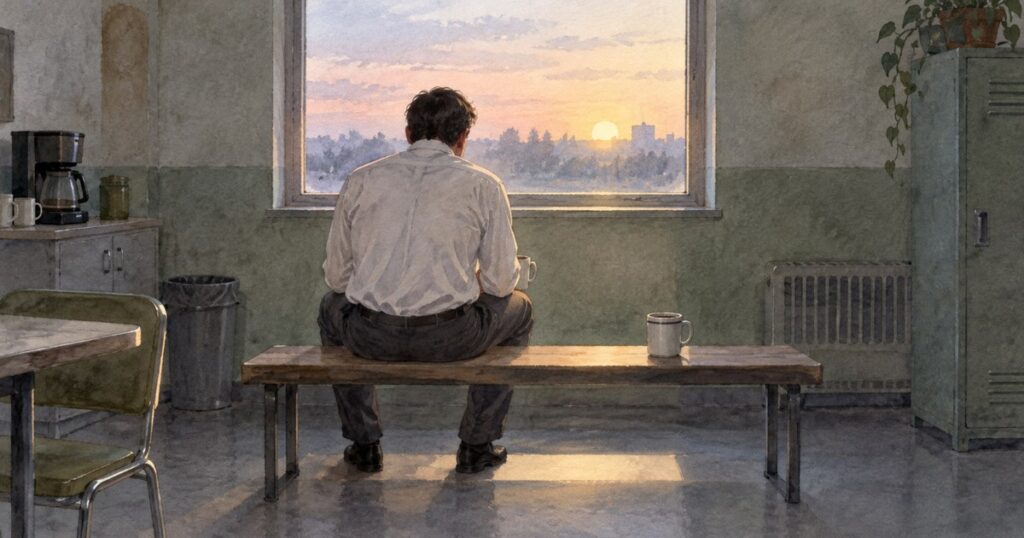
That means I have to be careful how I use the word. “It was a gift” is something I can say about my own life, looking back. It is not something I get to say about yours, and it is the wrong thing to say to anyone who is still in the middle of it. If I could visit the man walking into that office in 1994, I would not tell him his despair was a gift. I would sit down next to him.
So my honest answer is this: the dark place was not a gift while I was in it. It became one because of what I did with it afterward, and I was fortunate to have an afterward.
But I am one voice, describing one life. I want to hear from you.
- Is there a hard stretch of your life that you now count as a gift? When did it begin to look that way?
- Has anyone ever told you that your suffering was a gift, or part of a plan? How did it land?
- Is there something you went through that you refuse to call a gift, no matter what came after?
Please share your experience in the comments. Every comment is read before it is posted, and thoughtful disagreement is as welcome as agreement.
If you are in a dark place right now, please don’t wait for it to become meaningful. Reach out to someone today. In the United States, you can call or text 988 at any hour.
