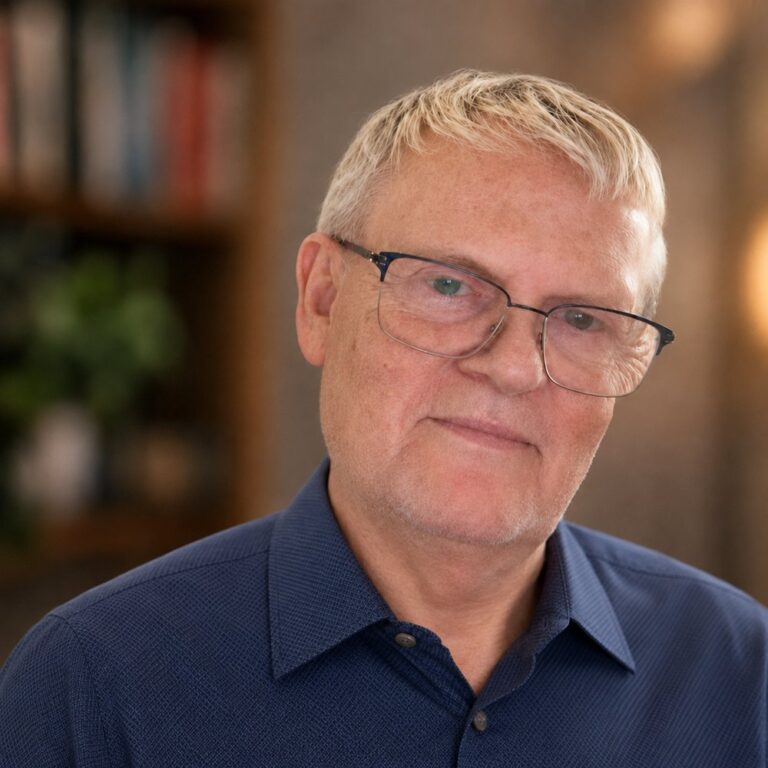
Robert K. Green, Ph.D.
The Emergent Self is a space for examining how identity, meaning, and responsibility are formed through lived experience, interpretation, and response. The essays gathered here begin from a simple but demanding conviction: who we are is not fixed. Selves are continually shaped through relationship, culture, power, memory, embodiment, and practice.
My work is grounded in sociology, phenomenology, interpretive theory, communication theory, systems thinking, and human development. I am especially interested in moments of tension—when personal experience collides with cultural narratives, institutional practices, inherited symbols, or structures of power—and in what those moments reveal about the ongoing work of becoming.
I hold a Ph.D. in Human and Organizational Development from Fielding Graduate University in Santa Barbara, California. My doctoral research examined how individuals make meaning of humiliation in a society structured by stigma, with particular attention to the lived experiences of people whose bodies are routinely misrecognized, devalued, or treated as socially excessive. That work led to the development of what I describe as the Experiences–Interpretations–Responses, or EIR, cycle: a way of understanding how meaning is continuously produced through recursive engagement with the world. Experiences shape interpretations; interpretations guide responses; responses, in turn, generate new experiences. This cycle operates at personal, relational, cultural, institutional, and systemic levels.
Before and alongside my academic work, I have lived several professional lives. I was formed early within a religious tradition that emphasized ritual, moral reflection, service, and the symbolic power of sacred story, and I served for a number of years as a Roman Catholic priest. I later worked extensively in organizational and systems contexts, including decades in healthcare administration and information technology, where my work focused on process improvement, organizational learning, and large-scale systems change. I have also taught for many years in higher education, primarily in sociology, organizational theory, business and society, and quality management, working with students from around the world in fully online environments.
These varied contexts—religious, educational, corporate, technological, and academic—have shaped how I think about culture and meaning. They have taught me that abstract theory is never merely abstract. Ideas are lived. Narratives organize behavior. Systems reward some interpretations while marginalizing others. Institutions teach people what to see, what to ignore, who counts, and what kinds of selves are allowed to emerge. Transformation, whether personal or collective, is not accidental. It requires attention, interpretation, courage, and practice.
This site is not a blog in the conventional sense, nor is it a platform for quick commentary or opinion. It is an archive of essays concerned with sensemaking: how meanings come to feel natural, how they are contested, and how they might be reimagined. The writing here draws on social constructionism, symbolic interactionism, communication theory, feminist theory, systems theory, structuralism, conflict theory, and developmental models—not to display theoretical allegiance, but to make visible the processes through which realities are constructed, sustained, resisted, and transformed.
I write for readers who are willing to think more deeply, tolerate ambiguity, and take responsibility for their own participation in the worlds they inhabit. If these essays do anything, I hope they encourage attentiveness: to language, to power, to embodiment, to experience, to social patterns, and to the quiet but consequential choices through which selves and societies are continuously made and remade.