
Articles Hero Image

Explore the Articles

The articles on The Emergent Self examine the ways we make meaning, form identities, enter relationships, respond to change, participate in culture, and continue becoming.

Some pieces begin with everyday experience and reflection. Others engage more directly with scholarship, theory, and research. Many move between the two. Rather than separating the writing into rigid academic and general-interest categories, the articles are organized around six broad themes of human experience.

These themes are not meant to place each article into a single box. Human experience rarely works that way. An article about grief, for example, may also be about identity, belonging, uncertainty, and meaning. The themes are intended as starting points—different ways of entering the larger conversation.

Six Ways into the Conversation

The six themes represent recurring dimensions of the interpretive life. They move from the personal and relational to the cultural and practical, while recognizing that each dimension continually intersects with the others.
Identity & Becoming
How identities take shape, change, and remain open to revision. Articles may explore selfhood, belief, guilt, shame, embodiment, personal history, and the continuing process of becoming.

Relationships & Belonging

How we form connections, seek recognition, experience intimacy and loss, and negotiate inclusion and exclusion within families, friendships, communities, and groups.

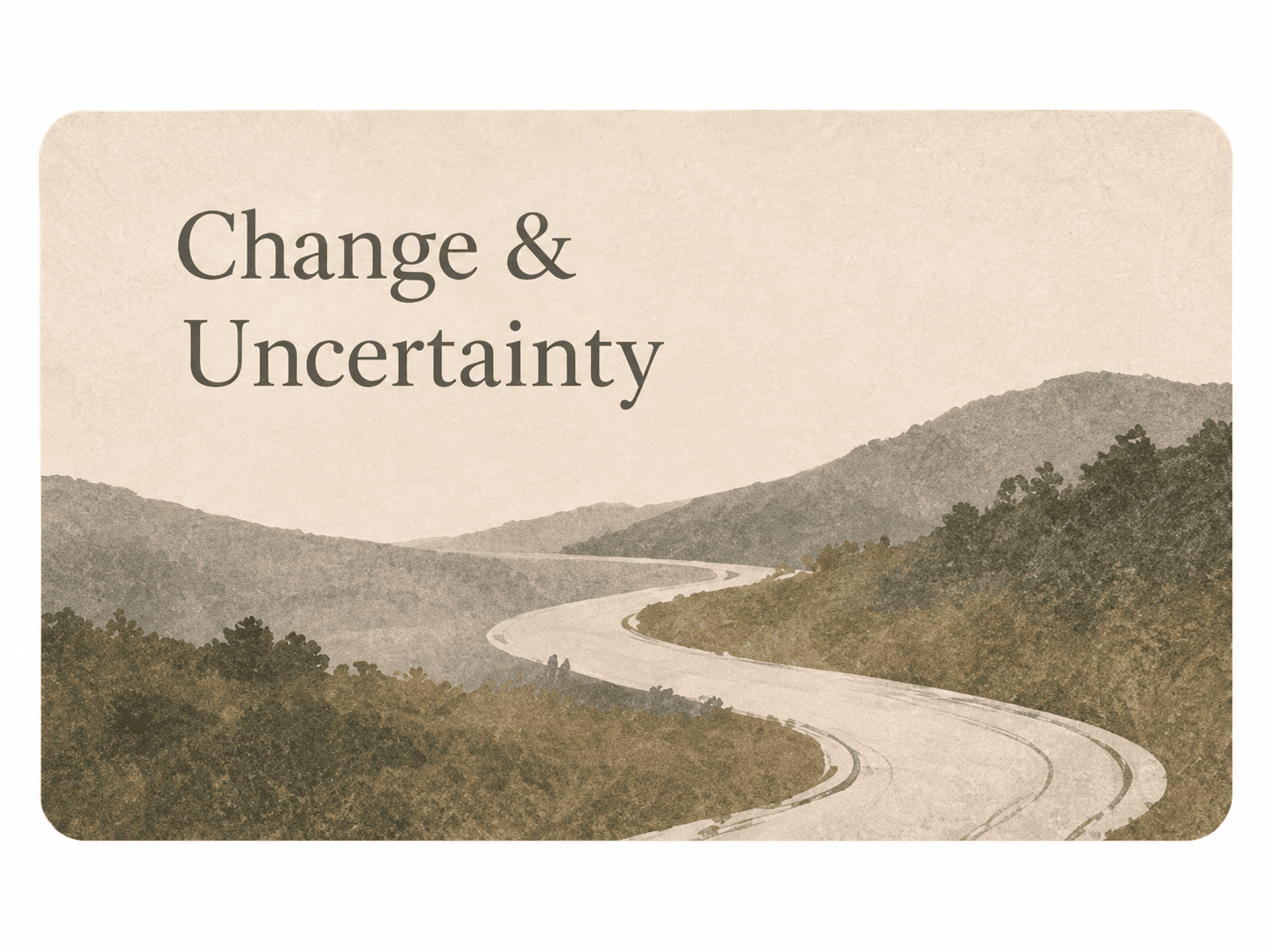
Change & Uncertainty

How we live through transition, disruption, ambiguity, doubt, loss, and liminal periods when familiar meanings no longer quite hold and new ones have not yet fully formed.

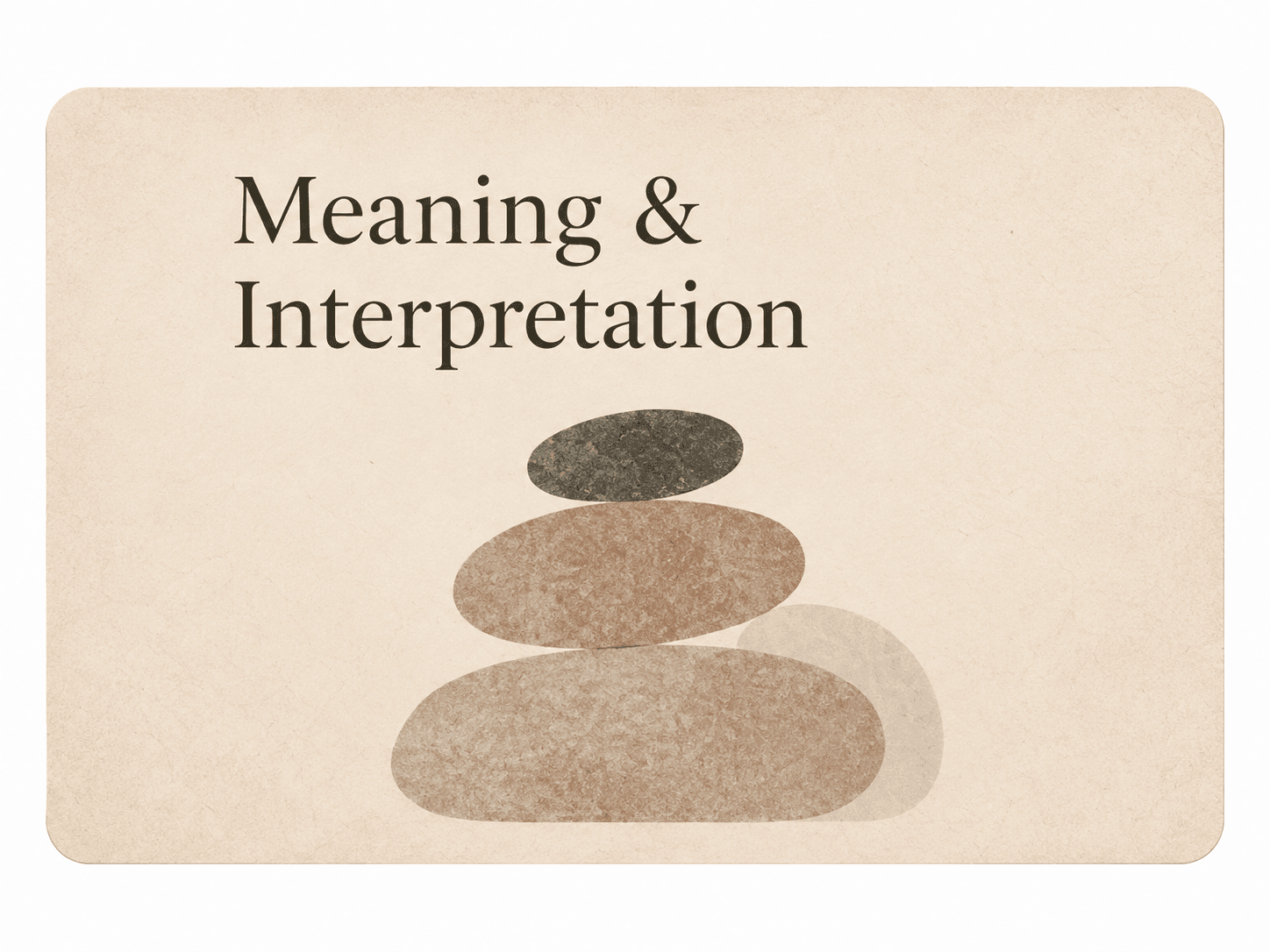
Meaning & Interpretation

How experience becomes meaningful through interpretation. These articles examine assumptions, narratives, perception, coherence, language, and the ways we understand what happens to us.

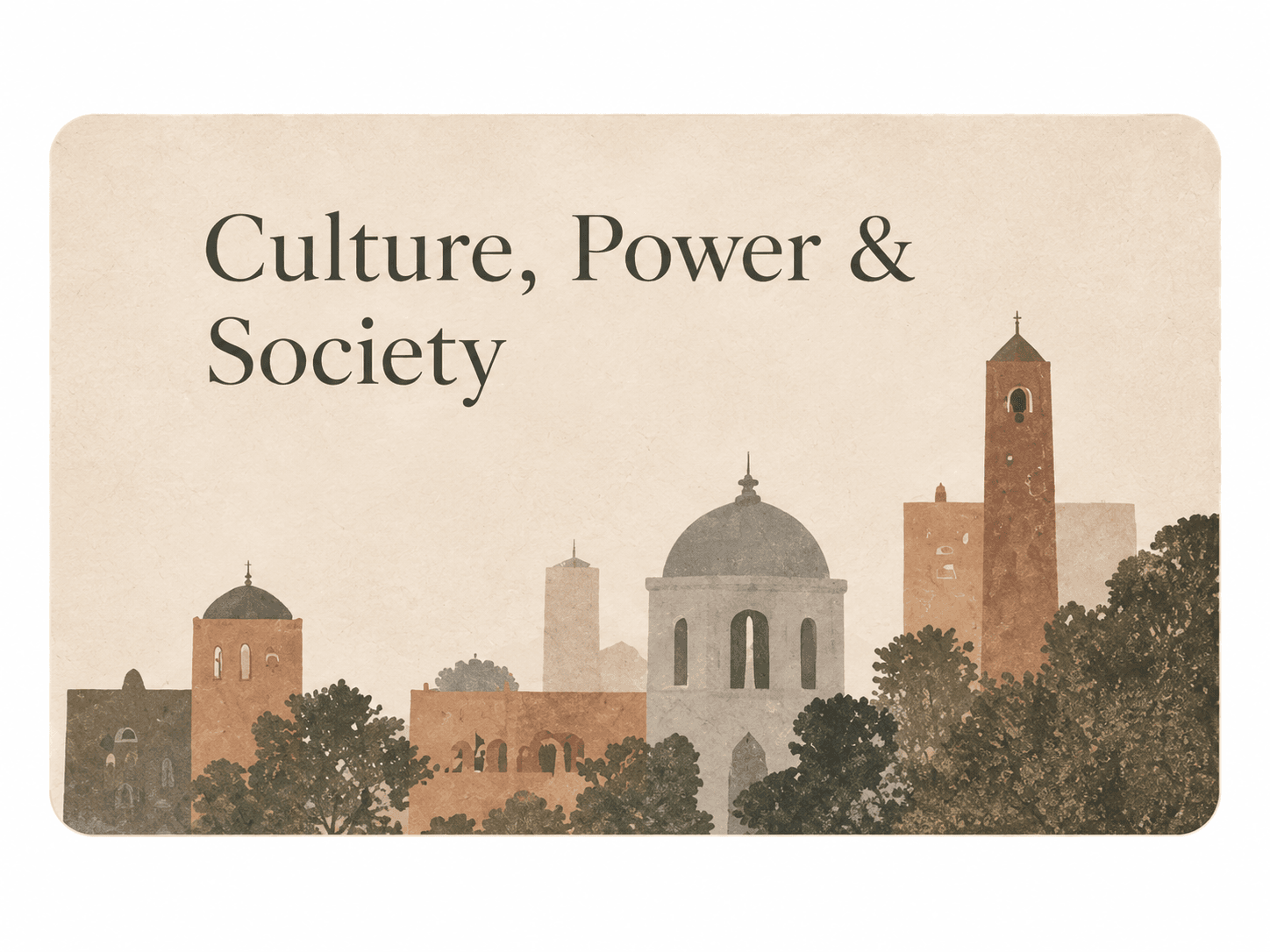
Culture, Power & Society

How social worlds participate in shaping who we become. Topics may include social construction, intersectionality, institutions, ideology, class, dignity, humiliation, recognition, and power.

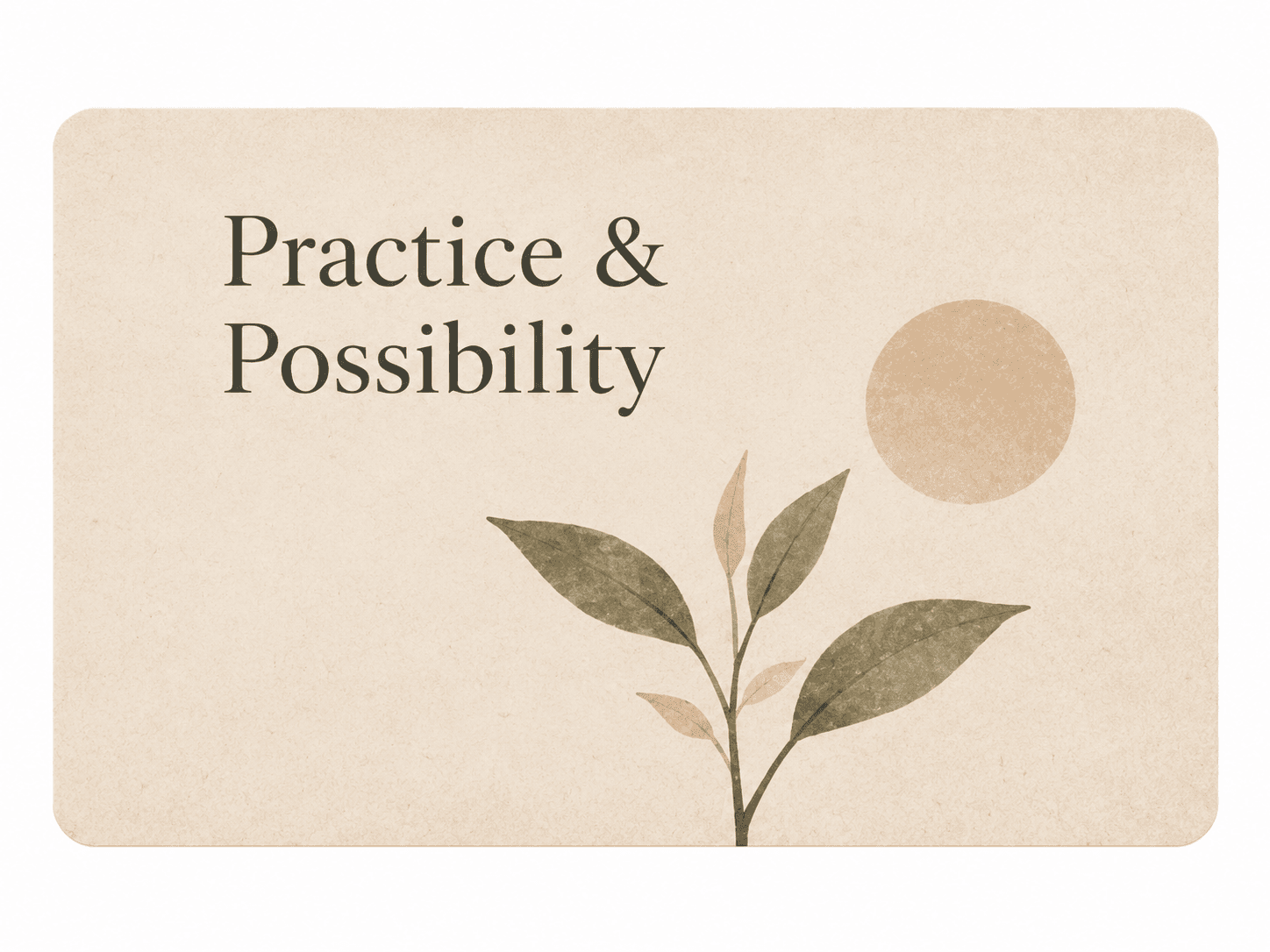
Practice & Possibility

How interpretation becomes response. These pieces explore agency, choice, flexibility, resilience, creativity, ethical action, and the practices through which different futures become possible.

Begin with a Question

You do not need to begin at the beginning or read everything in order. Start with a question, an experience, or a tension that matters to you: a change you are navigating, a relationship you are trying to understand, or a familiar story about yourself that no longer quite fits.

Browse the articles and choose something that speaks to that concern. Read for an idea that helps you notice more, rather than an answer you must accept. You are welcome to pause, disagree, and return with a different understanding.

If you would first like to understand the thinking behind the site, visit About The Emergent Self.

Choose Your Way In

Reflective Essays

Begin here when you want thoughtful reading grounded in everyday life. These essays explore questions of identity, relationships, uncertainty, belonging, loss, change, and becoming. Let an observation connect with your own experience before deciding what it means for you.

Scholarly Inquiry

Choose this approach when you want to follow an idea into its theoretical foundations. These articles engage research and scholarly traditions to examine how meaning is constructed. Take your time with unfamiliar concepts; the aim is deeper understanding, not mastery on a first reading.

The EIR Framework

The Experiences–Interpretations–Responses cycle offers a way to notice how experience becomes meaning and how our responses shape what happens next. It provides a shared starting point for exploring the ideas throughout this site.

Resources

Visit Resources when you want to continue exploring beyond an article. Move between these parts of the site in whatever order serves your inquiry.
Choose your way in

Turn Reading into Reflection

After an article, pause over one idea rather than trying to apply everything at once. The EIR cycle can help you turn that idea into a few questions about your own life.

1. Notice the experience

What happened? What did you notice, feel, or find difficult? Begin with a particular moment and describe it as clearly as you can.

2. Examine the interpretation

What meaning did you give that experience? Which assumptions, memories, relationships, or expectations influenced your reading of it? Consider another interpretation without dismissing your feelings.

3. Consider your response

How did you respond, and what followed? What other response might now be possible—a question, a conversation, a boundary, a small action, or a deliberate pause?
A few notes can be enough. Return to them later and notice what has changed. This is an invitation to inquiry, not a formula you need to follow correctly.

Keep the Conversation Going

Return to an essay when a new experience gives it a different meaning. Share a question with someone you trust, or get in touch with a reflection or a topic you would like to see explored. You can also use the subscription form below to receive new essays and reflections by email.